![]() |
| Fig 2: The Artists featured includes: Edward Gorey, Tim Burton, Kenshi Yonezu, Mikolaj Cielniak, Henry Patrick Raleigh, Shan Jiang Game included: Machinarium |
Thursday, 5 October 2017
Minor/Major Project: Influence Maps
Maya Tutorial: Ambient Occlusion and Wire Frame made with Arnold
![]() |
| Fig 1: Ambient Occlusion on Model |
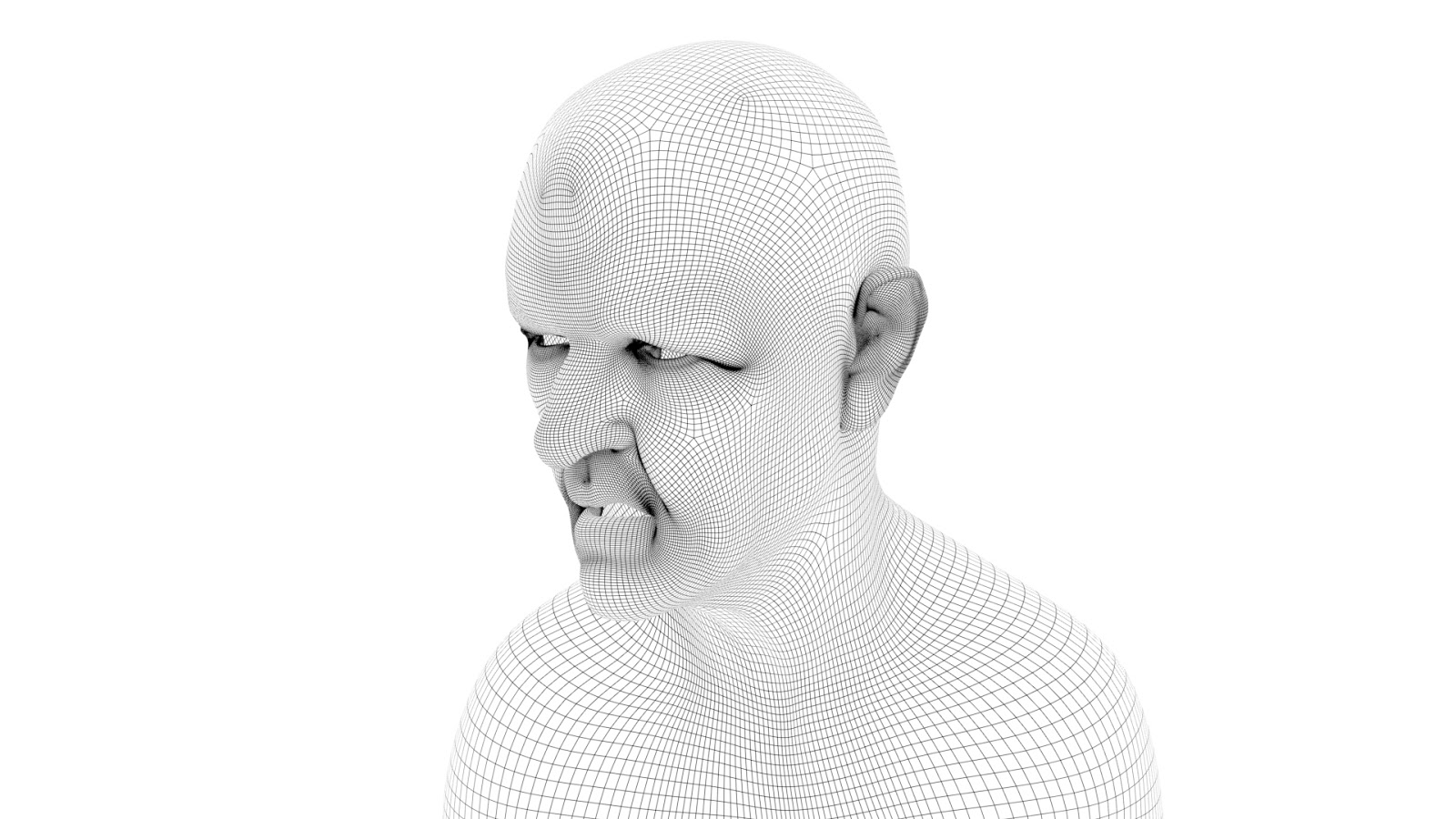
![]() |
| Fig 2: Wireframe on Model |
Achieving Ambient Occlusion and Wireframe Renders in Maya 2017 is so much easier to achieve with the renderer Arnold. Instead of going through a long process to get these renders in the old versions of Maya with Mental Ray, with Arnold the process has been greatly simplified.
(Model Provided by eat3D)
Friday, 29 September 2017
Year 3: Minor/Major Project: Stylistic Ideas
As a result of both by Initial Influences and the talk I had with Alan, I have decided on two distinctive style ideas that i would like to have for my project. As my Project is about Childhood Fears around people that can be classed as a "Bogeyman" I want to go down either the root of early animation or a more illustrative style.
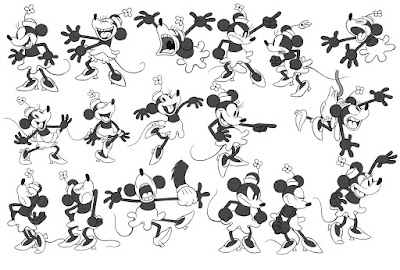
Rubber Hose Animation started of in the 1920s and was a staple of American animation for good couple of decades. Famous examples of this style of animation includes early Disney work like Steamboat Willie (1928), and The Skeleton Dance (1929) as well as the works by the Fleischer Studios (maker of "Swing you Sinners" 1930 and Betty Boop) as well as Paramount Pictures. The first notable character associated with this new style of animation at the time was Felix the Cat, a character that would spawn a whole series of imitations including Mickey Mouse, Oswald the Lucky Rabbit and Bimbo the Dog. A key characteristic of this type of animation is the flexibility and surrealist nature of it. As this was a first time experience for animations, almost every action a character did was exaggerated in a way that could be perceived as accidental.
This is one of the styles of Animation that I like the style and it can give very odd and surreal results for my characters. I could focus on the key aspects of the designs for the characters and how to exaggerate their movements in a way that could be scary. There is also that aspect that old cartoons from that era in general has a certain creepy vibe to it just by how chaotic and surreal the animation can be at times and I'd like to achieve something similar.
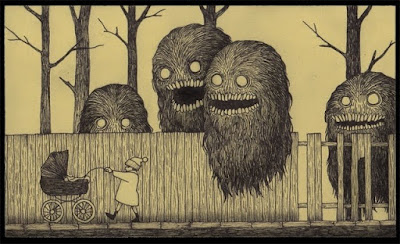
The other Style I'd like to go for is a more illustrative style by artists like Edward Gorey, who was an American Writer and Illustrated his works with pen and ink, depicting scenes from Victorian and Edwardian times in a unsettling way. His art style could fit into the category of gothic but there is a certain type of surrealist nature to his illustrations as well that has become a major influence in many artists nowadays, a big example being Director Tim Burton as well as the art direction in the film the Babadook (2014).
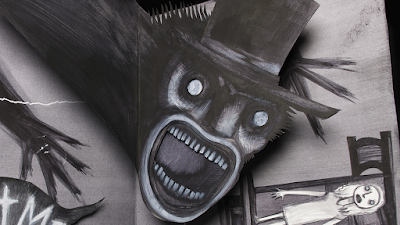
This is another style that I would like to explore as it as some horror roots to it which, in my opinion, fit the world of Mr. Plimsole very well. The style was commonly used in Victorian and Edwardian children books so there is a connection to the effect it has on child as well. I would have to go into more detail texture wise to achieve the ink on paper technique associated heavily in the style.
![]() |
| Fig 1: An Example of a Rubber Hose Style Character- Minnie Mouse |
Rubber Hose Animation started of in the 1920s and was a staple of American animation for good couple of decades. Famous examples of this style of animation includes early Disney work like Steamboat Willie (1928), and The Skeleton Dance (1929) as well as the works by the Fleischer Studios (maker of "Swing you Sinners" 1930 and Betty Boop) as well as Paramount Pictures. The first notable character associated with this new style of animation at the time was Felix the Cat, a character that would spawn a whole series of imitations including Mickey Mouse, Oswald the Lucky Rabbit and Bimbo the Dog. A key characteristic of this type of animation is the flexibility and surrealist nature of it. As this was a first time experience for animations, almost every action a character did was exaggerated in a way that could be perceived as accidental.
![]() |
| Fig 2: Example of the Rubber Hose style of Animation |
This is one of the styles of Animation that I like the style and it can give very odd and surreal results for my characters. I could focus on the key aspects of the designs for the characters and how to exaggerate their movements in a way that could be scary. There is also that aspect that old cartoons from that era in general has a certain creepy vibe to it just by how chaotic and surreal the animation can be at times and I'd like to achieve something similar.
![]() |
| Fig 3: Illustration by Edward Gorey |
![]() |
| Fig 4: Example of the Gothic Illustrative style present in 2014's The Babadook |
Maya Tutorial: Rigging 3 Part 2 & 3- Conditional Squash and Stretch & No Flip Pole Vector
![]() |
| Fig 1: Default Model in the Maya Viewport |
![]() |
| Fig 2: Model Stretched out in Maya Viewport |
![]() |
| Fig 3: Model out stretched with a twist at the knee in the Maya Viewport |
![]() |
| Fig 4: Render of the Default Model |
![]() |
| Fig 5: Render of the model with arm bent |
![]() |
| Fig 6: Render of Model with arm Stretched |
![]() |
| Fig 7: Render of Model with leg bent with no Twist in the IK |
![]() |
| Fig 8: Render of Model with IK twisted at -35 |
For these two tutorial I decided to do them together as they both used the same rig. One was about conditional squash and stretch, using nodes to enable stretching for certain reasons as well as to a point. While I did follow the tutorial step by step for the arm I was able to do the leg almost entirely independent, only using the tutorial when I was confused about what parts should be point constrained and the full length of the leg.
The other tutorial dealt with the Pole Vector in the knee and how to stop it from flipping when the knee bends in certain ways, enabling for easier and simpler pose ability. Again this was a simple tutorial and I was able to understand how the method worked relatively fast although the way that the Twist Control and Offset still has me a little confused as to the maths behind it working.
Overall both tutorials were relatively easy for me to get my head around and could prove to be useful in my project for my characters.
Maya Tutorials: Rigging 3 Part 1- Basic Squash and Stretch & Volume Perservation
![]() |
| Fig 1: Toadstool at its default |
![]() |
| Fig 2: Toadstool Stretched out |
![]() |
| Fig 4: Toadstool in the Maya Viewport |
Thursday, 28 September 2017
Year 3: Minor/Major Project: Initial Influences
![]() |
| Fig 1: Initial Influences Map |
However as I go trough this project, the influences may change or increase as it is early days at this moment of time.
Year 3: Minor/Major Project- Initial Idea and Concept
For this project I want to explore character design in much more detail then I did in Year 2, hopefully this would expand to animation reel/ animated short of the characters, fully textured and rigged. So my idea for the project was to take examples of people my family and friends feared in their childhoods, a sort of Bogeyman in a way, and make characters depicting them as monsters humanoids that play on those fears. This started by my mum telling me that the thing that scared her the most as a child was her neighbour who was nicknamed as Mr. Plimsole, who would stalk up and down the street and was the source of many of my mums nightmares as a kid.
For the animated short I would like to do a short in the vein of the introduction to Halloween Town in The Nightmare Before Christmas by Tim Burton and the animated short Swing You Sinners by the Fleischer Brothers.
Using my mum's example of her own childhood bogeyman, Mr. Plimsole based on how she played "Knock Down Ginger" with her brothers. I'd like to do a surrealist piece of Mr. Plimsole introducing the concept of "childhood bogeyman" through something like a song or voice over with a monologue or poem. There would be the two main characters, Mr.Plimpsole and my Mother as a child.
Another idea was to solely take a series of influences from members of my family and friends and create a bunch of caricatures of their childhood fears, and produce an animation reel showing performing different movements and actions.
For the animated short I would like to do a short in the vein of the introduction to Halloween Town in The Nightmare Before Christmas by Tim Burton and the animated short Swing You Sinners by the Fleischer Brothers.
Using my mum's example of her own childhood bogeyman, Mr. Plimsole based on how she played "Knock Down Ginger" with her brothers. I'd like to do a surrealist piece of Mr. Plimsole introducing the concept of "childhood bogeyman" through something like a song or voice over with a monologue or poem. There would be the two main characters, Mr.Plimpsole and my Mother as a child.
Another idea was to solely take a series of influences from members of my family and friends and create a bunch of caricatures of their childhood fears, and produce an animation reel showing performing different movements and actions.
Subscribe to:
Posts (Atom)